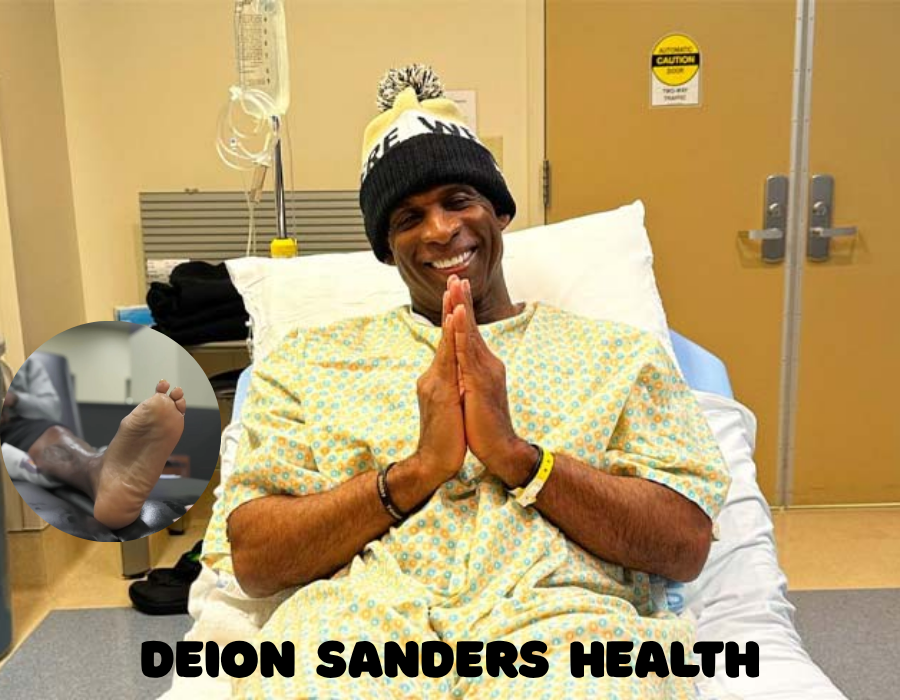
Deion Sanders has always been known for his larger-than-life personality, whether on the football field or on the sidelines as a coach. But in recent years, the conversation around him has shifted from sports highlights to something much more personal—his health. From serious vascular complications to cancer treatment and repeated blood clot issues, his medical journey has been intense and closely followed by fans and media alike. Despite all of this, he continues to stay active as a coach and remains deeply involved with his team. This article breaks down his health story in a clear, simple, and complete way so anyone can understand what he has gone through and where things stand today.
Who Is Deion Sanders? A Quick Look at His Life
Deion Sanders is one of the most famous athletes in American sports history. He played in both the NFL and MLB, making him a rare dual-sport superstar. Known for his speed, confidence, and flashy style, he earned the nickname “Prime Time.” After retiring as a player, he transitioned into coaching and eventually became the head coach at the University of Colorado.
His coaching career brought a new wave of attention, especially as he rebuilt the Colorado Buffaloes football program. However, alongside this success, his health started becoming a major topic of discussion. Fans who once admired his athletic dominance now began following his recovery journey with concern and support.
Early Health Challenges and Warning Signs
Long before recent headlines, Deion Sanders had already started facing serious health issues. Over time, he underwent multiple surgeries on his legs and feet due to poor circulation. Doctors identified vascular complications that affected blood flow in his lower body.
These early signs were not small issues. They hinted at deeper problems in his circulatory system. For someone who built his career on speed and athletic performance, these changes were significant. He often spoke about pain and mobility challenges, but he continued working, showing strong mental resilience despite physical limitations.
Blood Clot Struggles and Vascular Disease
One of the most serious ongoing conditions in his health journey has been blood clot formation. Blood clots can become dangerous when they block normal circulation, especially in the legs. In his case, repeated clotting episodes required medical procedures and constant monitoring.
Doctors also linked his condition to peripheral artery disease, a disorder where narrowed arteries reduce blood flow to the limbs. This condition can lead to pain, infections, and in severe cases, tissue damage.
Over time, Sanders underwent multiple interventions, including surgical procedures to remove or dissolve clots. These treatments helped manage the condition but did not fully eliminate the risk, meaning long-term care became necessary.
The 2025 Cancer Diagnosis: A Life-Changing Moment
In 2025, during routine medical scans, doctors discovered a serious issue: bladder cancer. This diagnosis shocked fans and the sports world. What made it more complex was that the cancer was found while he was already being treated for blood clot problems.
Bladder cancer is a condition where abnormal cells grow in the lining of the bladder. In Sanders’ case, it required immediate medical attention. The diagnosis turned his already difficult health journey into something far more serious and emotional.
Despite the fear surrounding cancer, early detection played a major role in improving his treatment outlook.
Surgery and Recovery Process
Following the diagnosis, Deion Sanders underwent major surgery to remove the affected bladder. In modern medical treatment, bladder reconstruction or replacement procedures are sometimes performed depending on the severity of the case.
The recovery process was not easy. It involved physical healing, medical monitoring, and emotional adjustment. At the same time, he was still dealing with vascular complications and clot risks, which made recovery even more complex.
However, reports from medical updates later suggested that the cancer was successfully treated and considered in remission. This gave both Sanders and his supporters a sense of relief, even though ongoing monitoring remained necessary.
Ongoing Blood Clot Management in 2026
Even after cancer recovery, blood clot issues continued into 2026. In fact, Sanders required additional procedures, including clot removal treatments, to manage recurring circulation problems.
Doctors typically treat these conditions with a combination of surgery, medication, and regular scans. In his case, the goal is prevention—stopping new clots from forming while ensuring existing circulation remains stable.
He also takes scheduled breaks when needed, especially when medical evaluations show increased risk. This careful balance allows him to continue coaching while prioritizing his health.
Current Health Status in 2026
As of 2026, Sanders is reported to be in a stable condition. He has returned to coaching activities and remains active with the Colorado Buffaloes football program.
However, his health is still under medical supervision. “Stable” does not mean problem-free. Instead, it means his condition is being managed successfully through ongoing care.
He has publicly expressed that he feels strong enough to continue working, though he remains aware of his physical limits. Regular checkups and preventive treatments are part of his normal routine now.
Think of his health like a car that has had major repairs—it can still run well, but it needs regular maintenance to stay on the road.
Impact of Health on His Coaching Career
Health challenges naturally affected his coaching schedule. At times, he had to step away from the team temporarily for medical procedures. These absences raised concerns among fans and players.
However, his return to the field after treatments showed his commitment. His presence is considered highly motivating for his team. Players often describe him as energetic, passionate, and deeply involved in their development.
Still, balancing coaching with medical recovery is not easy. He has had to adjust his workload, delegate responsibilities, and prioritize recovery periods when necessary.
Medical Perspective: What His Condition Means
From a medical standpoint, Sanders’ health involves a combination of vascular disease and cancer recovery history. Peripheral artery disease affects blood flow, while his past cancer requires long-term monitoring to ensure no recurrence.
Blood clotting issues add another layer of complexity. Clots can form due to reduced circulation, surgery history, or other underlying health factors.
Doctors typically recommend lifelong monitoring in such cases. This includes imaging tests, blood thinners in some cases, and lifestyle management strategies.
While his situation is serious, it is not uncommon for patients with similar conditions to live active lives with proper care.
Public Reaction and Media Attention
Fans and media outlets have closely followed his health journey. Every update tends to generate strong reactions across social media. Many fans express support, while others speculate about his ability to continue coaching long-term.
Sports networks regularly report updates whenever he undergoes treatment or returns to the field. His story has become more than just sports news—it is also a human interest story about resilience, health struggles, and determination.
The attention reflects how deeply connected people are to his legacy, both as an athlete and as a coach.
Mindset, Lifestyle, and Mental Strength
One of the most remarkable parts of Sanders’ journey is his mindset. Despite multiple health challenges, he continues to project confidence and positivity.
Managing chronic illness requires not just medical care but also mental strength. Stress management, emotional balance, and a strong support system play important roles in recovery.
He has often emphasized faith, discipline, and motivation as key parts of his life. This mindset helps him push forward even when physical conditions become difficult.
Future Outlook and Long-Term Health
Looking ahead, Sanders’ health will likely require continued monitoring. Chronic vascular conditions do not disappear completely, but they can be managed effectively.
Future risks include clot recurrence or complications related to circulation. However, with modern treatment and regular checkups, many of these risks can be controlled.
His ability to remain active in coaching will depend on how well his condition stays managed over time. The fact that he is already back on the field shows positive progress, but long-term balance remains essential.
Conclusion
Deion Sanders’ health journey is a powerful example of resilience in the face of serious medical challenges. From vascular disease and repeated blood clots to a major cancer diagnosis and surgery, he has faced situations that would slow down many people. Yet he continues to return to coaching and stay active in the sport he loves. While his condition still requires careful monitoring, his story today is one of stability, recovery, and determination. It reminds us that even public figures go through private battles—and strength often comes from how those battles are managed, not avoided.
FAQs
What health problems has Deion Sanders faced?
He has dealt with vascular disease, blood clot issues, and bladder cancer, along with multiple surgeries on his legs and feet.
Is Deion Sanders cancer-free now?
Reports suggest he successfully underwent treatment for bladder cancer and is currently considered in remission, but still monitored.
Why does he keep getting blood clots?
His condition is linked to poor circulation and peripheral artery disease, which increases clot risk.
Is Deion Sanders still coaching?
Yes, he continues to coach the Colorado Buffaloes, although he sometimes takes short breaks for medical care.
What is his health outlook for the future?
His condition requires lifelong monitoring, but with proper treatment, he can continue an active professional life.